 By Gonny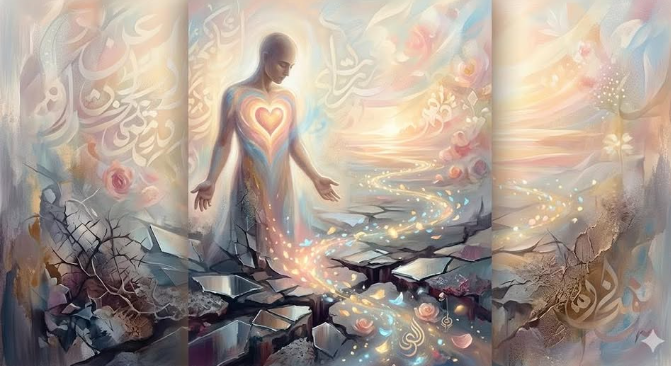
When the “Check Engine” light goes on in our car, we immediately know what to do. We take it to the garage, the mechanic plugs in a diagnostic computer, finds the error code, and replaces the broken part. The problem is solved, and we drive away.
For most of us, this is exactly how we have been taught to handle our emotional pain.
When sadness, anxiety, or deep grief shows up, our mind instantly puts on a mechanic’s overalls. We want to analyze it. We dig into our past to figure out exactly who or what caused the “error code.” We read self-help books, analyze our childhood, and try to desperately “fix” whatever feels broken inside of us so we can get back on the road.
But the human heart is not a car engine. And trying to fix it with the analytical mind often just tightens the knot.
Scrolling on FB, I saw a video about Sufism and the words “Dard Rahā” appeared, meaning “the wisdom of the heart.” So I started reading, and this is what I discovered:
“Dard” means inner pain, sorrow, or heartache.
“Rahä” (or Raah) means the path, the flow, or liberation.
Together, they point to something profound: the path through the pain.
Unlike the clinical, analytical approach that tries to diagnose and push the pain away, this heart-centered wisdom invites us to do the exact opposite.
It asks us to stop analyzing.
It suggests that liberation doesn’t come from ignoring our emotions or fixing our “story,” but from consciously feeling them without allowing them to define who we are.
Through quiet presence, conscious breathing, or simply sitting in stillness, the goal is to allow the tightly clenched heart to soften and open up again.
This is a completely different, much quieter way to approach our inner storms.
When we are in the middle of a heavy emotional storm, the frightened, ego-driven part of our mind immediately draws a terrifying conclusion. It looks at the emotional debris and declares:
“I am pain .”
This is a heavy, hopeless sentence. It locks our entire identity to the pain.
But what if we drop the mechanic’s tools and simply step back into quiet, observing Awareness?
Whether you call it “the presence” of Eckhart Tolle, “the non-judgmental vision” of A Course in Miracles, or the poetic softness of Sufism, the shift is exactly the same. The moment you step back, the narrative changes completely.
Instead of saying: “I am pain,”
the heart breathes out and whispers: “There is pain visible in Awareness right now, and Love is simply allowed to look at it.
Read that second sentence again. Notice how much space and air there is inside of it.
The pain is still there, yes. You aren’t denying it, repressing it, or putting a fake positive sticker over it. But you are no longer the pain. You are the vast, silent, untouched Awareness in which the pain is temporarily floating.
You don’t need to write a thesis on why the pain arrived. You don’t need to fix the pieces of the shattered mirror. You simply have to be willing to look at the sharp edges with absolute gentleness.
When we stop treating our inner sorrow like a mechanical failure that needs to be urgently repaired, and instead treat it like a frightened guest that just needs to be seen, something miraculous happens……
The resistance drops.
The exhaustion fades.
And we realize that we were never actually the pain at all; we just forgot, for a moment, how to let Love do the looking.
With love and light,
G.