 By Gonny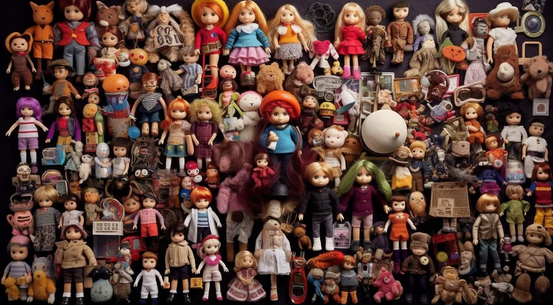
We all know someone, or perhaps we are that someone, who can’t quite resist collecting things. Shoes that never met the street, teacups that have seen more shelves than lips, and drawers that contain the history of civilization…from old dolls to mysterious keys that open nothing but curiosity.
At first sight, it looks harmless. Harmless joy. A way of saying: Look, life has been good to me. But behind every “thing” lies a tiny thought, whispering: I need this to feel safe, to feel complete, to feel… me.
According to A Course in Miracles, this is the ego’s most charming illusion: the belief that what we have can replace what we are.
The Course gently laughs and reminds us: “Seek not outside yourself, for it will fail, and you will weep each time an idol falls.” (T-29.VII.1:1)
An “idol” doesn’t have to be golden. It can also be a doll and on sale.
When the Course speaks of idols, it doesn’t scold us for liking beautiful things. It simply invites us to look why we cling to them. Are we decorating our home, or are we decorating our fear of emptiness? Are we collecting memories, or proof that we exist?
You see, the ego loves collections….not because it loves beauty, but because it fears silence. Every new purchase is like turning up the volume on the illusion: I am separate, therefore I must fill the gap.
And yet, there comes a day when even the biggest house feels too small. The things we own begin to own us. Every shelf becomes a little shrine to the past, every closet a museum of who we thought we were. The Course smiles again and whispers: “The world you see is but the idle witness that you were right.”
So, if I believe I am lacking, my shelves will testify…loudly. But if I remember that I am whole, then even an empty room can sing.
A student once said: “I tried to declutter my house and ended up decluttering my mind.” That’s the real miracle.
Forgiveness is the ultimate form of minimalism, the art of letting go of what was never really ours.
There’s no judgment in this. The Holy Spirit doesn’t frown at our 300 different dolls. He simply asks, “Do you need all of them to come Home?”
And if we smile at that, then we’ve already taken a step closer.
So next time someone feels the urge to buy one more doll…ask gently: What am I really trying to fill?
And maybe they’ll discover that the space they feared was empty is actually the doorway to peace.
After all, true abundance isn’t measured in things…it’s the quiet joy of realizing that nothing is missing.
With love and light,
G.